
Bracelet sizing guide
Determine the correct size of bracelet
A few simple measurements will help you choose the correct bracelet width and a comfortable overall length.
Step 01
Determine the bandwidth
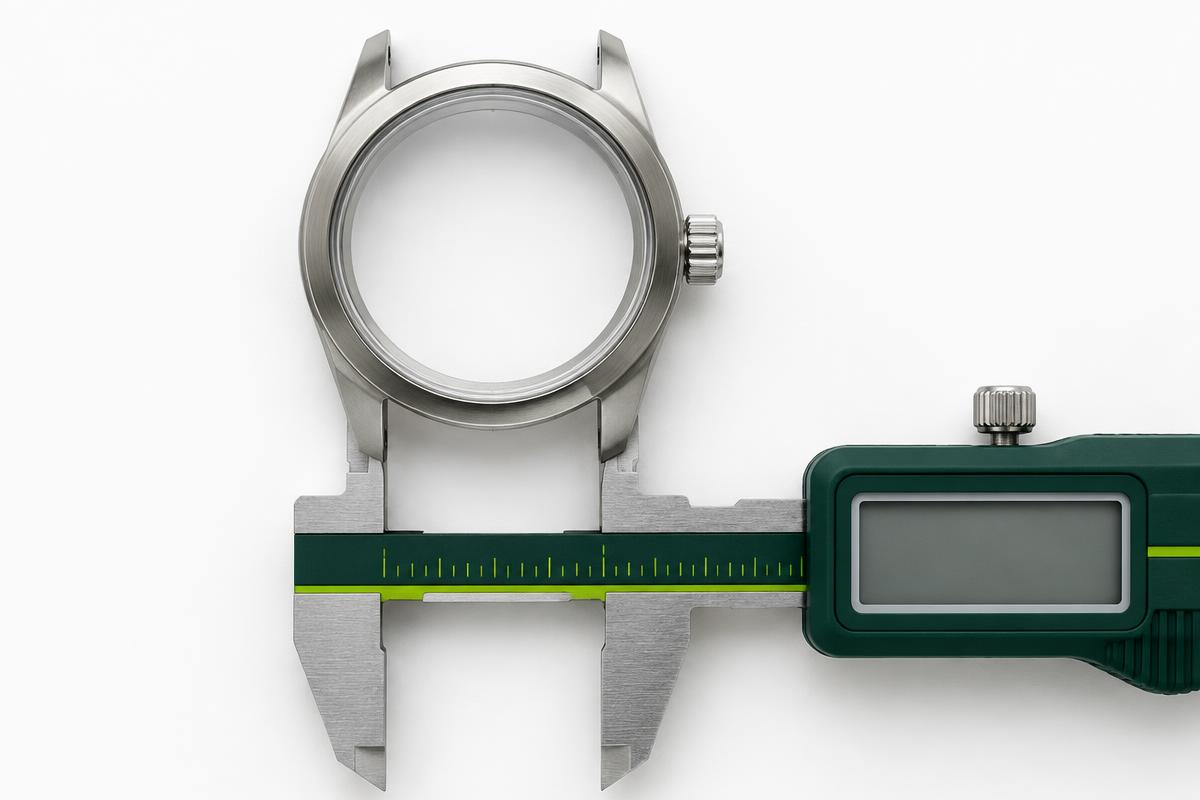
The correct bandwidth is determined by the lug width of your watch case, so it’s important to choose the right size. The measurement is taken from the inside edge of one lug to the inside edge of the other, as shown.
Step 02
Measure the watch case
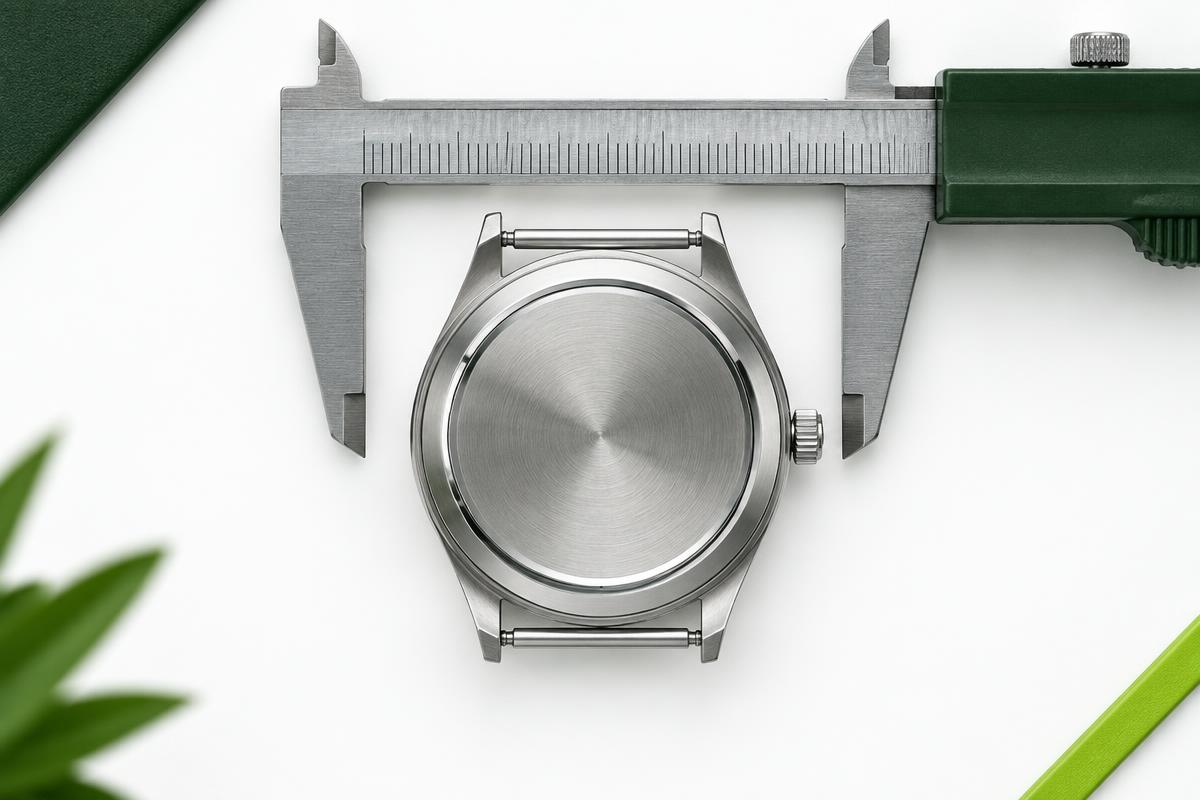
Next, measure the watch case from lug to lug — ideally measuring from the centre of one spring bar hole to the centre of the other.
Check the bracelet height
It’s also important to make sure the height of the bracelet matches the height of the watch case, so everything sits neatly and comfortably together.
Step 03
Measure your wrist
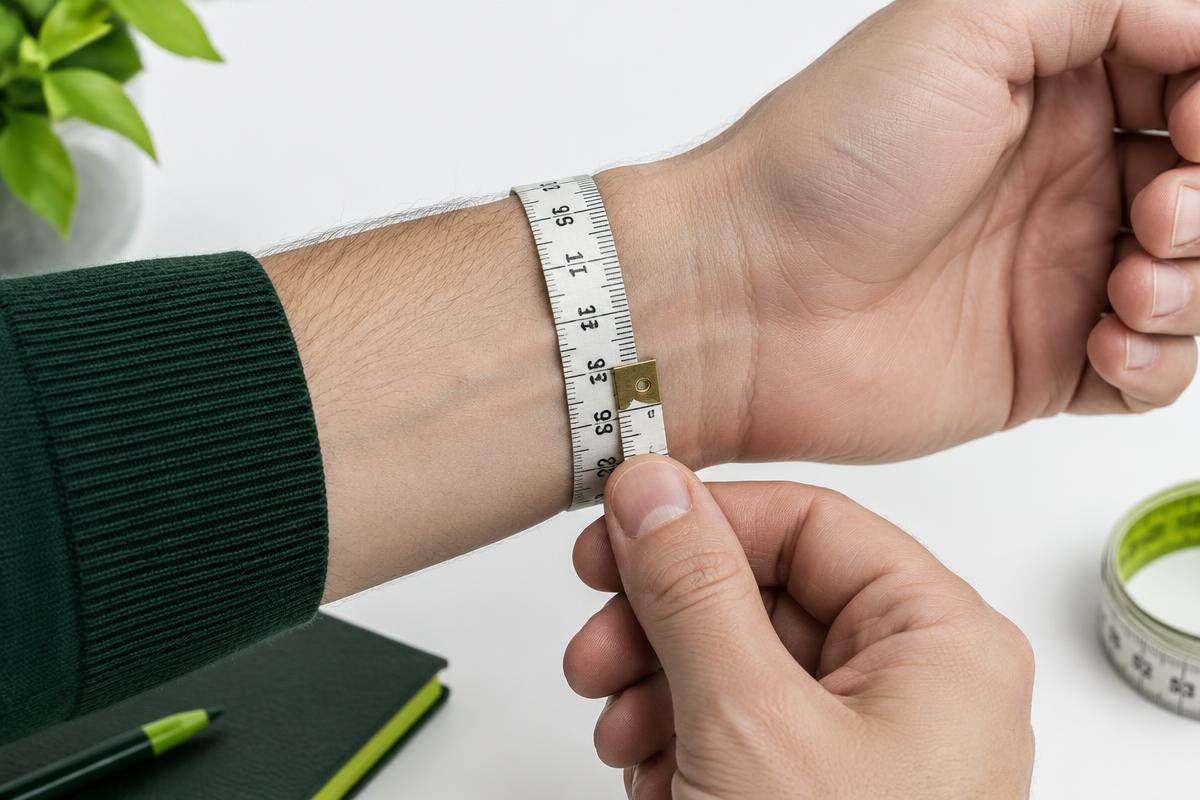
Measuring your wrist is really easy. If you have a tailor’s tape measure, simply wrap it comfortably around your wrist and note the measurement.
No tape measure? No problem! Simply cut a narrow strip of paper, wrap it gently around your wrist, mark or cut it where the ends meet, and then measure the length with a ruler.
For the most accurate fit, make sure the paper or tape measure is snug but not too tight.
Quick reminder
You can measure in either centimetres (cm) or inches (") — just make sure you select the same measurement when choosing your strap size.
Step 04
Determine bracelet length
Subtract the case dimensions from the wrist size. This is the approximate size of the bracelet you will need. Possibly add a few millimetres, as the strap is never worn too tight and the folding clasp on the back also needs some space.
Here’s an example calculation
Let’s say your wrist measures approximately 170 mm, and your watch case is 42 mm in diameter. However, the measurement that really matters is the distance from one spring bar hole to the other, rather than the diameter of the watch case. In this example, that measurement might be around 45 mm.
170 mm − 45 mm = 125 mm
As you’ll normally want a little extra room for a comfortable fit, a 130 mm bracelet would be a good starting point.
Keep in mind that bracelet and strap sizes are always approximate, particularly with metal bracelets, as the clasp and any additional links on the underside of the wrist also need to be taken into account.
Also, don’t forget that some straps can be fine-tuned at the folding clasp, while others can be adjusted by removing or adding extension links, giving you a little more flexibility to get the fit just right.